Case Study
ServiceAssistant
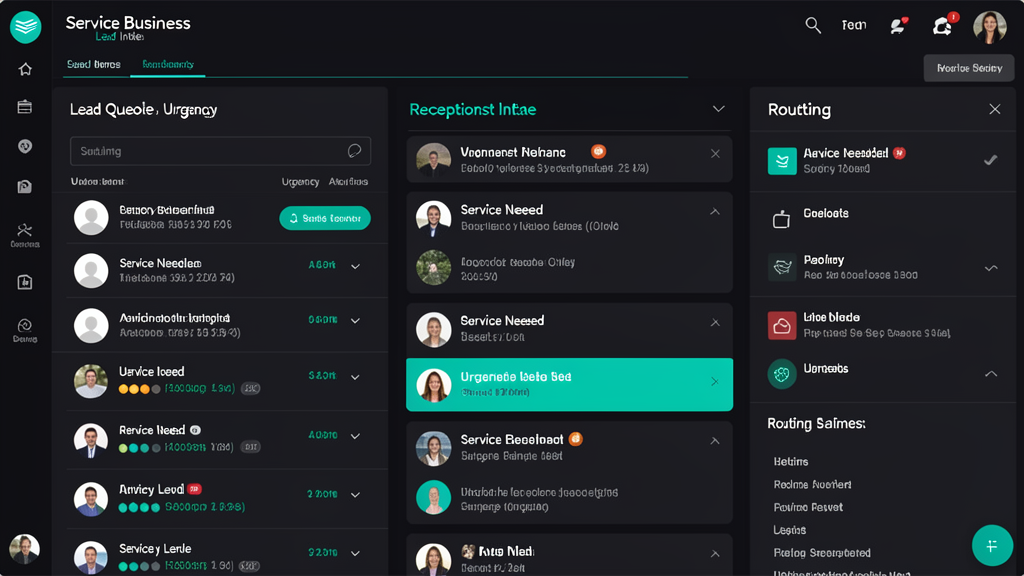
Captures service-business leads, scores urgency, and routes to the right person.
The Problem
Why this exists
Service businesses get leads through calls, texts, emails, and web forms. Someone has to triage urgency, figure out which tech is available, and track follow-up. High-volume shops drop leads and send the wrong person — every missed call is a lost job.
How It Works
From input to outcome
Lead arrives
Phone, web form, or email. The system captures contact info, service type, and description automatically.
Urgency scored
Keyword matching and time windows determine priority. "Water flooding basement" gets a faster response than "faucet drip."
Routed to the right tech
Assigns based on availability and service type. Status tracks through contact → scheduled → in-progress → completed.
Technical Decisions
Why build it this way
Urgency scoring over FIFO
First-in-first-out doesn't work for service calls. A burst pipe needs a faster response than a slow drain, and keyword-based urgency scoring handles that without needing a dispatcher.
Results
What it enables
Emergency calls routed in seconds instead of minutes
Every lead captured and tracked — none lost in the shuffle
What's Next
Planned improvements
- SMS text-in support and auto-replies
- Follow-up scheduling with SLA tracking